


Setareh Yaghini, PFP
Financial Planner, Investment and Retirement Planning
Let's work together to achieve your financial goals
Ways I can help you
My passion lies in leveraging financial expertise to assist my clients in developing a personalized financial strategy. I am dedicated to taking the time to understand what matters most to you, and offering tailored strategies to help you achieve your goals, whatever they may be. Let's work together to create a path to financial success that aligns with your unique aspirations.


Reports & Insights

Global Investment Outlook
For more on our current view and outlook, consult The Global Investment Outlook.

Economic Outlook
Produced by RBC Global Asset Management's Chief Economist Eric Lascelles, the #MacroMemo covers what's on our economic radar for the week.
Discover & Learn

2026-09-04T12:03:07
Trade Zone: Where the new U.S. tariffs cut the deepest
5.5% — The average tariff rate on U.S. imports from Canada, up from ~3%, but still below the average U.S. tariff rate on imports from all countries. 0.4% —Share of Canadian GDP directly exposed to new tariffs. While more than 80% of exports will remain tariff-free under the rules outlined in the Canada-U.S.-Mexico Agreement (CUSMA), the impact on the sectors that have been targeted will be significant. Many of Canada’s primary agri-food exports, such as grains, oilseeds, major protein and livestock, and processed goods were excluded from the Section 338 list. However, several important sectors: Dairy, Honey, Sugars, Syrups, Horticulture, Botanicals, Essential Oils Alcoholic beverages are impacted.
2026-03-10T12:22:09
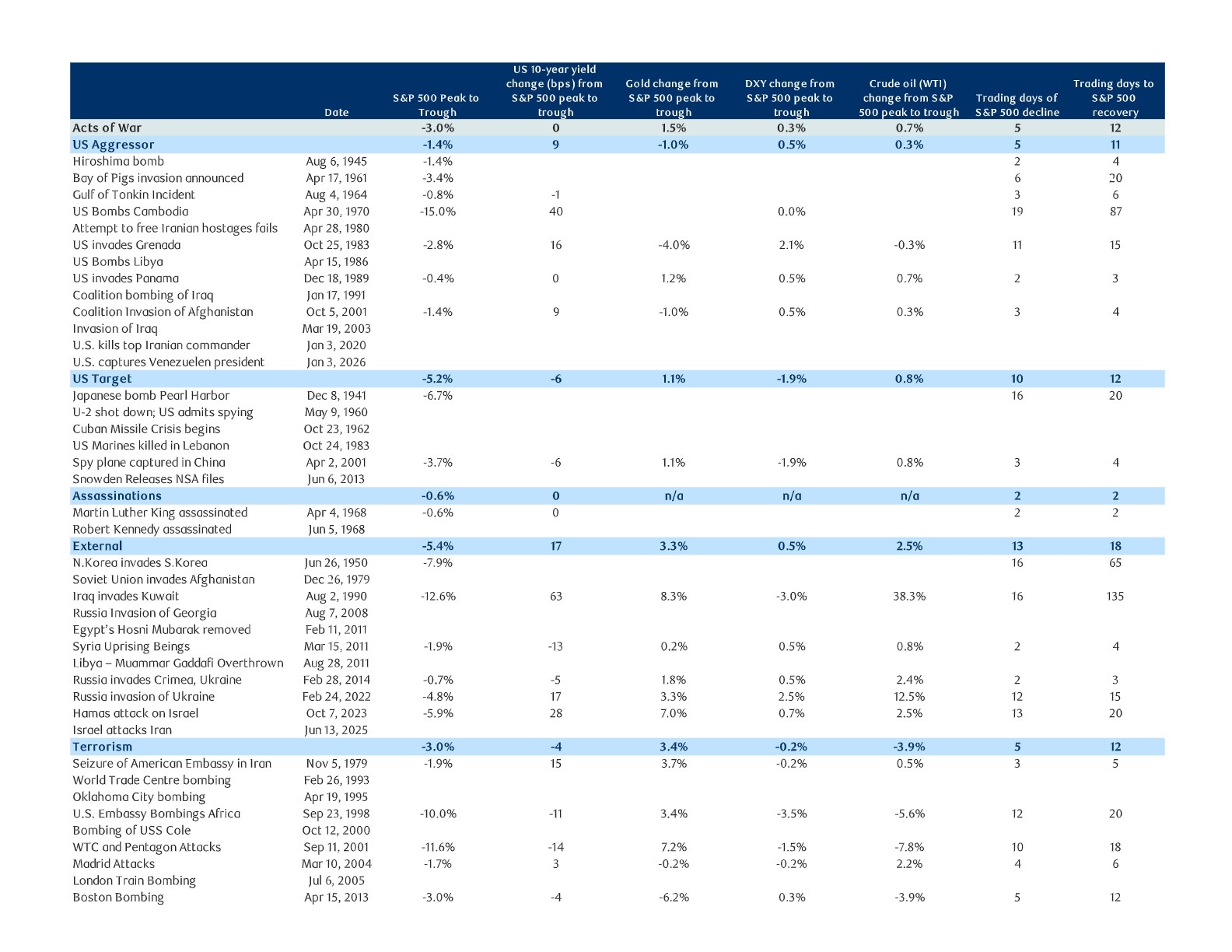
It’s no secret that markets don’t like uncertainty. It’s also no secret that markets have been facing a lot of it lately as a result of the pandemic, inflation fears and more recently, War in the Middle East. While there’s no way to accurately predict how long uncertainties will persist or how markets will react in the future, it can be helpful to take a look back to gauge how markets have responded to major events in the past. With the help of RBC Global Asset Management (RBC GAM), here we’ll focus on equity market reactions to acts of war and terrorism. In a recently released commentary, RBC GAM noted that acts of war rarely have large or lasting impacts on markets, though periods of heightened uncertainty are common. The following chart looks at how U.S. equity markets have reacted historically.
2025-08-20T12:39:52
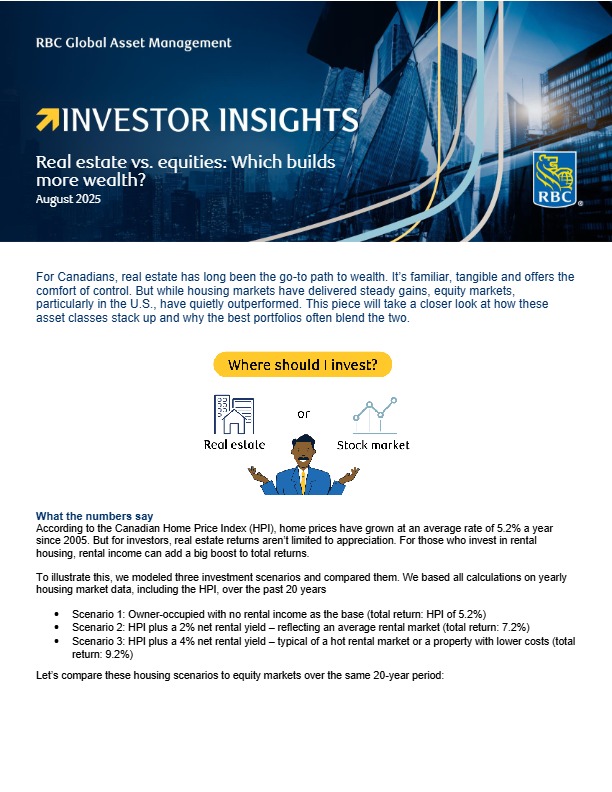
Real estate vs. equities: Which builds more wealth? Real estate has had an exceptional run over many decades, driven by low interest rates, limited supply and strong demand. But in today’s housing markets, with interest rates up compared to the last 15 years and affordability stretched, future gains may not match the past. Equities, on the other hand, continue to be powered by earnings, innovation, and global momentum. Yes, market downturns are a normal part of the journey, but for long-term investors, the trend has consistently been upward.